Suki Seokyeong Kang: Our Spring
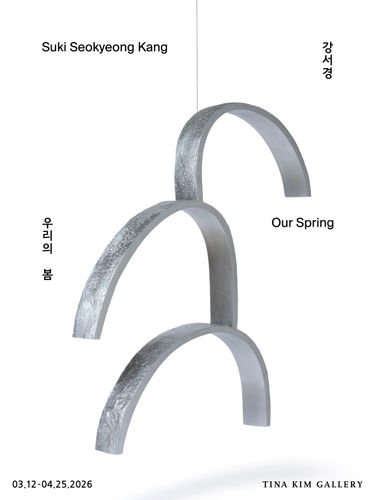
Tina Kim Gallery is honored to present a solo exhibition of the late Korean artist Suki Seokyeong Kang (1977–2025), Our Spring, on view from March 12 through April 25, 2026. Coinciding with the one-year anniversary of the artist’s untimely passing, this exhibition stands as both a memorial and a celebration of her singular artistic vision. The presentation brings together significant sculptural and two-dimensional works from the last decade of the artist’s life and will mark the New York debut of pieces from some of Kang’s most influential series. The exhibition follows Kang’s critically acclaimed surveys at the Leeum Museum of Art (2023) and the Museum of Contemporary Art Denver (2025), highlighting the enduring and global resonance of her practice.
For Kang, art was a method of measuring how the individual inhabits the world—a practice deeply rooted in the Korean concept of Jari, denoting a "place," "seat," or "territory." Initially trained in traditional Korean painting, Kang transcended the static representation of landscape, reimagining it instead as a lived experience defined by the body and its equilibrium. Working with industrial materials like steel and aluminum alongside the organic warmth of silk, thread, and hanji (Korean mulberry paper), she developed a unique visual vocabulary defined by the limits of her own physicality. The scale of her sculptures was often determined by what she could lift, carry, or embrace. Consequently, her objects exist not as monumental, imposing structures, but as tender extensions of human motion, balance, and mutual support.
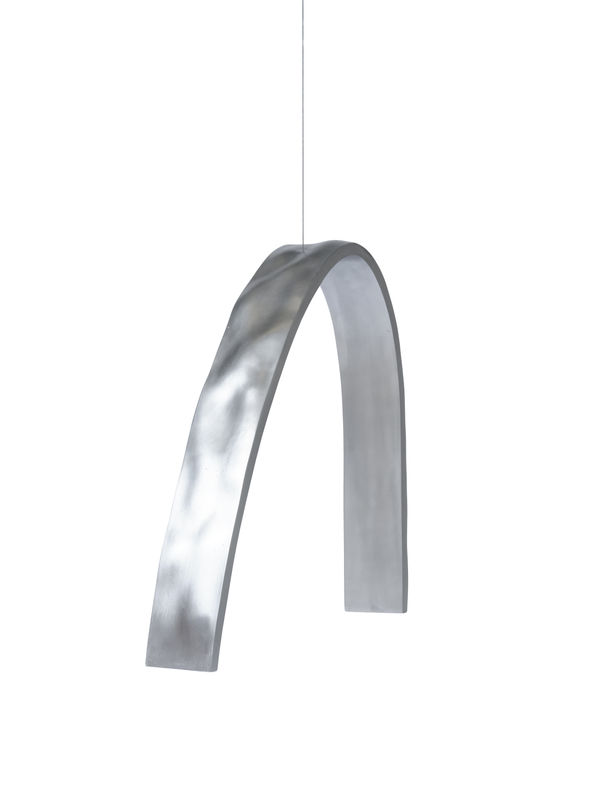
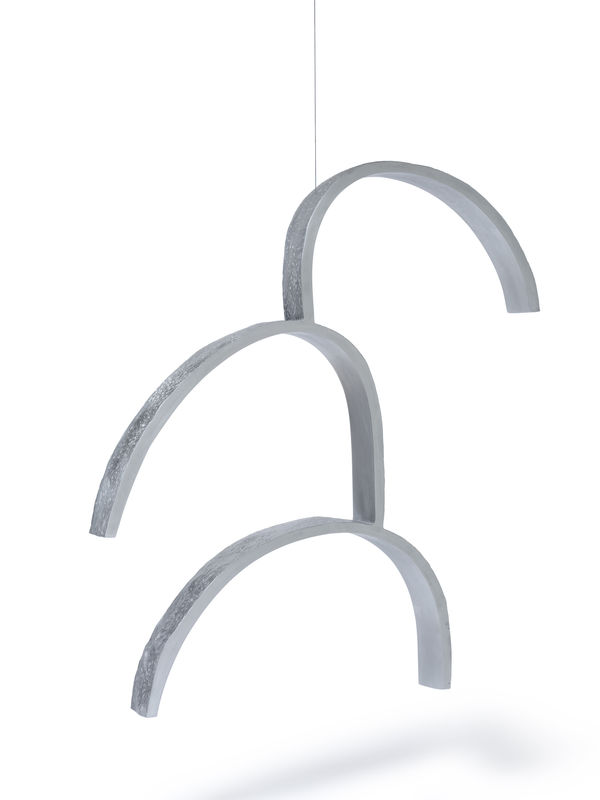
Central to the exhibition is Mountain–hours, an immersive installation comprising a number of aluminum mobiles accompanied by the sound of poems inspired by these sculptures and recited in Korean by the artist. This work transforms the gallery into a surreal, kinetic terrain. Hovering at varying heights or gently grazing the floor, the mobiles rotate in conversation with the room’s invisible air currents. Constructed from bent and hammered aluminum, the sculptures feature textured, dented surfaces that catch the light, evoking the ridges of a mountain range or the brushstrokes of an ink-and-wash painting translated into three-dimensional space. The installation operates as a synesthetic environment where the boundaries between the visual and the aural dissolve, inviting the viewer to traverse a jinkyung, or "True-View" landscape that is not merely seen, but felt through the passage of time. The title itself holds a double resonance: "hours" marks the passage of time and the repetitive, cyclical nature that pervades Kang's practice—each work a measure of accumulated labor and contemplation—while its homophonic echo of "ours" suggests a collective space of shared experience and mutual belonging.
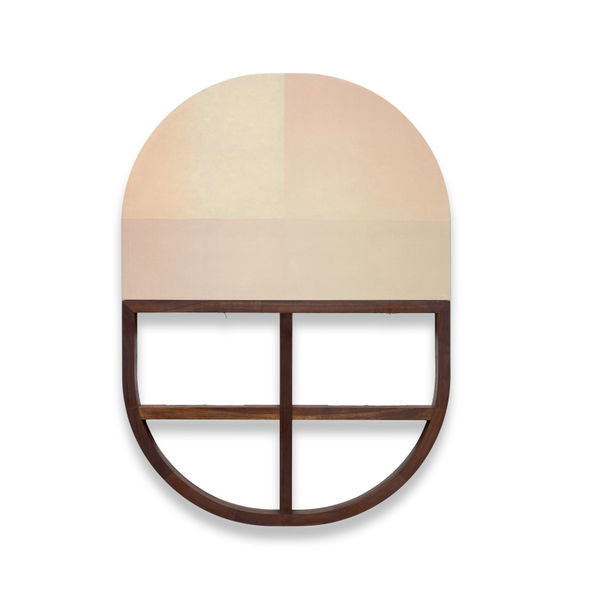
The exhibition also features major works from the artist’s Jeong–step and Mora–nuha series, which further articulate her investigation into the structural rhythms of earthly existence. The wall-mounted Jeong–step works are grounded in the logic of the grid, referencing the Jeongganbo—a fifteenth-century Korean musical notation system where each square represents a unit of time and pitch. With the Jeong–step works of delicate silk thread framed in wood, Kang unites the delicacy of traditional Korean painting materials with hard-edged architectural structure. Layers of color in varied hues applied to the silk create subtle chromatic fields within the grid's compartments. For Kang, the grid was not a rigid constraint, but a flexible instrument for scoring narrative, organizing movement, and framing the void.
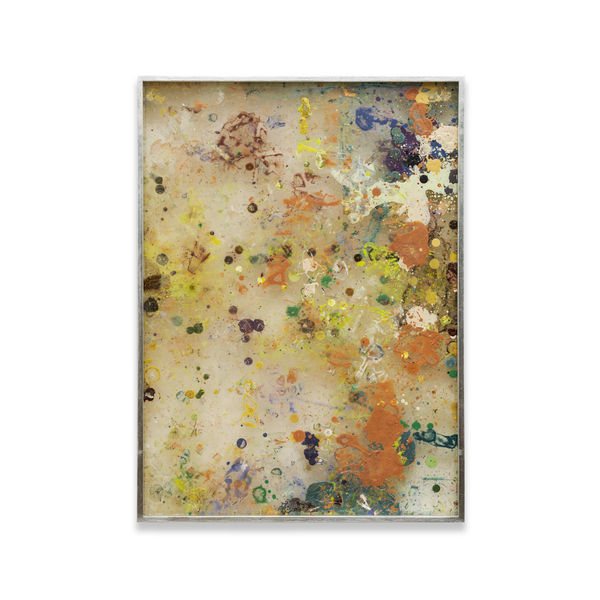
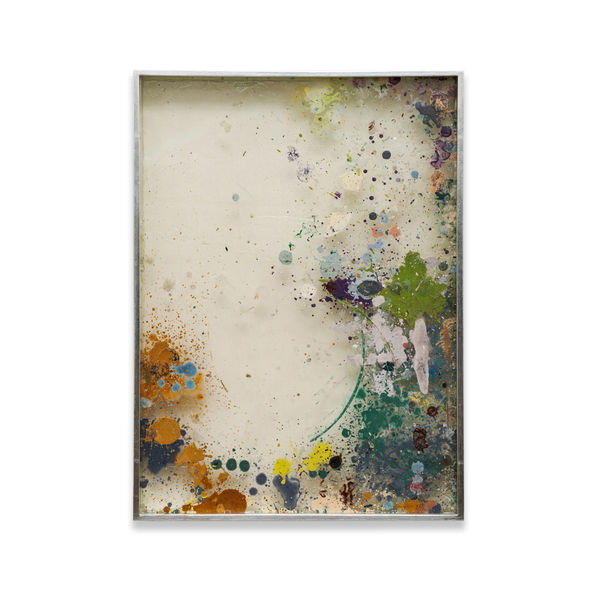
In dialogue with these structural works, the Mora–nuha series embodies the accumulation of time as a physical substance. Drawing its name from the linguistic term for a unit smaller than a syllable, each Mora represents a discrete measure of temporal experience. Created in her studio in the Seoul neighborhood of Nuha, the works are composed of layered gouache and dust on acrylic panel—material residue captured from the artist’s daily painting practice. These works function as repositories of time, encompassing the unseen weight of temporal passage, much like the artist’s signature "mat" works, which represent a stage for the individual.
Collectively, these works showcase the artist’s profound consideration of human existence through her artistic practice, which honors the precarious yet beautiful balance required to stand alone, while also acknowledging the necessity of leaning on one another. This exhibition serves as a tribute to Suki Seokyeong Kang’s legacy—a reminder of her commitment to creating spaces where the past and present, and the individual and the collective can coalesce into a harmonious equilibrium.
Sales inquiries: inquiries@tinakimgallery.com | +1 212-716-1100
Press inquiries: Hanna Gisel | hanna@hannagisel.com


Installation views of Suki Seokyeong Kang: Our Spring at Tina Kim Gallery, New York (March 12–April 25, 2026).
Courtesy the artist’s estate and Tina Kim Gallery. Photo: Hyunjung Rhee.


-

Suki Seokyeong Kang’s Works Are Still Unfolding
Frieze April 2, 2026Registering movement or awaiting activation, paintings and sculptures from Suki Seokyeong Kang’s last decade – before her untimely death from cancer, aged 47, last year...Learn More -

The Top 10 Exhibitions to See Around the World This April
Ocula April 1, 2026Our editors around the world have compiled the shows not to miss this month, including photographs of New York City hip-hop culture, the chaotic nature...Learn More

